.avif)

Blog
Read more Articles
Keep up to date with medspa marketing strategies.

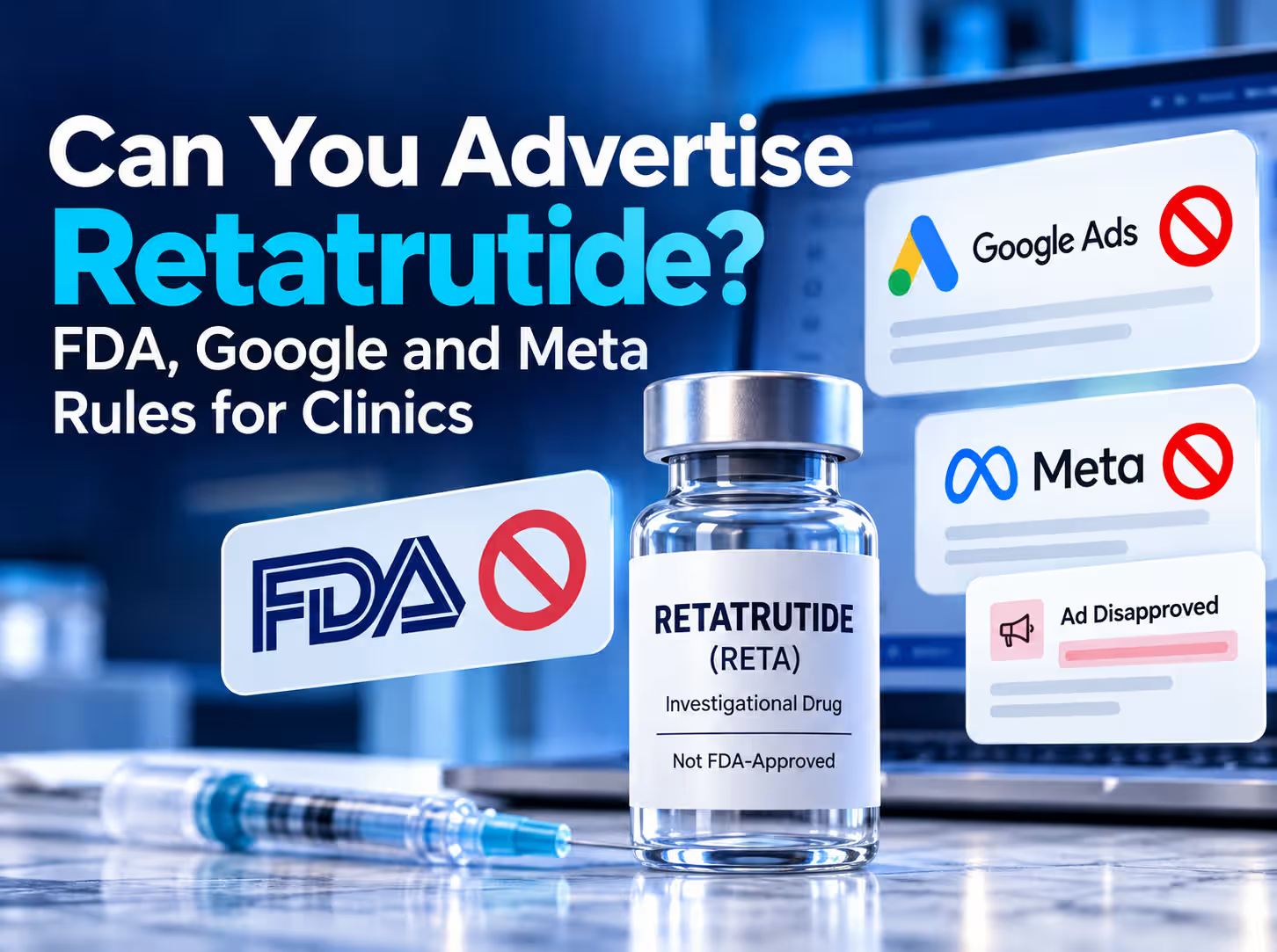
Retatrutide, often shortened to “Reta,” is Eli Lilly's investigational obesity drug, and patients are already searching for it. If you run a weight loss clinic or telehealth practice, you've probably wondered whether you can advertise it.
The short answer is no. As of October 2026, retatrutide isn't FDA-approved, federal law doesn't allow it to be compounded, and both Google and Meta prohibit ads that promote it. That holds no matter what you call it, so nicknames like “Reta” or “GLP-3” don't change anything.
What you can do is publish accurate educational content about it and advertise the weight loss services you're legally able to offer. Below is where the lines sit for the FDA, Google Ads, Meta, LegitScript and SEO.
Retatrutide is a once-weekly injection Lilly is developing for obesity and related conditions. It's a single molecule that activates three hormone receptors: GLP-1, GIP and glucagon. Tirzepatide (Zepbound) activates two of those, which is why retatrutide gets called a “triple agonist.” Sellers often market it as “GLP-3,” a label Lilly calls scientifically inaccurate.
It is not FDA-approved for any use. Lilly has reported positive results from five Phase 3 trials, and on July 23, 2026 it said it plans to submit a Biologics License Application to the FDA in the first quarter of 2027. A filing isn't an approval. FDA review typically takes most of a year after submission, so even on Lilly's timeline, approval likely wouldn't come before late 2027, and it isn't guaranteed.
Lilly is clear about where things stand today. Retatrutide hasn't been approved by any regulator, it's legally available only to participants in Lilly's clinical trials, and the company states it cannot be legally sold or marketed for human use.
No. Because retatrutide isn't approved, selling or administering it outside a clinical trial means dealing in an unapproved new drug. Compounding doesn't get around that. The FDA states that retatrutide cannot be used in compounding under federal law, and that it isn't a component of any FDA-approved drug.
The FDA is enforcing this at every level of the supply chain. It has warned telehealth companies for marketing retatrutide, including directly to consumers, ingredient distributors for selling it to compounders, and outsourcing facilities for repackaging it.
On August 24, 2026, it sent warning letters to five online peptide vendors. One went to Peptide Partners LLC, which was selling vials labeled “GLP-3 Reta (Retatrutide).” All five sold retatrutide, and all five used “research use only” or “not for human consumption” disclaimers. The FDA rejected those labels because the sites made it clear the products were meant for people, and it warned that unresolved violations could lead to seizure or an injunction without further notice.
Lilly is going after sellers too. Weeks before those letters, it filed six federal lawsuits against companies selling unauthorized retatrutide and said it had referred more than 200 entities to the FDA, the Justice Department, state attorneys general and licensing boards, according to an analysis by ArentFox Schiff.
If your practice is offering retatrutide today, stop and talk to healthcare regulatory counsel before you do anything else.
No. Several parts of Google's Healthcare and medicines policy apply, and any one of them is enough to stop the campaign.
Unapproved substances. Google bans certain products “regardless of any claims of legality.” The list includes non-approved products marketed as safe or effective for treating a condition, products that have been subject to government regulatory action or warning, and products with names confusingly similar to an unapproved pharmaceutical. Retatrutide fits all three, and the last one means renaming it “Reta” or “GLP-3” doesn't help.
Speculative and experimental treatments. A separate Google policy prohibits promoting speculative or experimental medical treatments. Its only exceptions are for FDA-licensed cell and gene therapies, which doesn't cover an investigational drug.
Unauthorized pharmacies. Offering prescription drugs without a prescription is treated as an egregious violation. Google suspends the account on detection, without a warning, and the advertiser isn't allowed back.
Google also doesn't judge your ad copy on its own. It reviews the ad, the landing page, the rest of your website, your accounts and third-party sources. A clean “medical weight loss” ad that sends people to a page selling retatrutide is still a violation, and removing the word from the headline doesn't fix it.
For a clinic that depends on Google for new patients, losing the whole account is a much bigger problem than one disapproved ad. We cover a similar situation with hormone therapy in Can You Run TRT Ads Without LegitScript?
No. Meta's Drugs and pharmaceuticals policy bans ads that promote the sale or use of unsafe substances, and Meta decides what counts as unsafe. An unapproved drug the FDA is sending warning letters about isn't a close call.
Meta does allow prescription drug ads, but only from qualified advertisers. Online pharmacies and telehealth providers need active LegitScript certification and Meta's written permission. Even then, prescription drug ads can only run in the US, Canada and New Zealand, can't target anyone under 18, and Meta prohibits selling prescription drugs directly on its platforms. None of that opens a path for a drug that isn't approved.
General weight loss ads are a different matter. A licensed practice can usually promote a physician-supervised weight loss program, as long as the ad and landing page accurately describe what you offer. What doesn't work is a generic weight loss ad that sends people to a retatrutide offer. We cover how this plays out across peptides more broadly in How to Market Peptides in 2026.
No. Google and Meta both require LegitScript certification for online pharmacies and telehealth providers that want to advertise prescription drug services. Certification shows a business meets the standards to advertise lawful products. It doesn't make an unapproved drug approved, and it doesn't make selling one legal.
In practice, a business built around selling retatrutide isn't a realistic candidate for certification anyway. If you offer legitimate weight loss treatment and need certification to advertise it, our guide to passing LegitScript for HRT and weight loss clinics walks through the process.
Yes, as long as it's education and not a sales page. Organic content doesn't go through ad review, and there's real search demand from patients trying to understand what retatrutide is and when they might be able to get it.
SEO isn't an exemption from drug law, though. An article explaining the clinical trials is fine. A page that says “ask us about retatrutide” or points readers to a way to get it is promotion of an unapproved drug, whether it ranks organically or not.
Good topics include what retatrutide is and how it works, how it compares with tirzepatide and semaglutide, whether it's FDA-approved and when that might change, and why products sold online as “Reta” are risky. Have the content medically reviewed, put a date on it, state the regulatory status clearly and update it when the status changes. Clear question-and-answer formatting also helps these pages get cited by AI search tools, which we explain in how FAQs help AEO.
Send readers from that content to a page about services you can actually provide, like a medical weight loss consultation. Avoid a retatrutide waitlist or anything else that implies you'll be offering it.
Put your ad budget behind what you can legally provide. For most clinics that's a physician-supervised weight loss program: a medical evaluation, an individual plan, nutrition support and regular follow-up. Ads for that can run on Google and Meta as long as they describe the program accurately and don't imply retatrutide is part of it.
FDA-approved weight loss medications, such as semaglutide (Wegovy), tirzepatide (Zepbound) and orforglipron (Foundayo), can be part of that program. Naming them in ads brings in the prescription drug rules above, including certification on both platforms. Compounded versions of approved GLP-1s are also under heavy FDA scrutiny, and the agency's position is that compounded drugs should only be used when a patient's needs can't be met by an approved drug.
For brick-and-mortar clinics, local search is still one of the best channels. Pages built for searches like “medical weight loss clinic in [city]” or “weight loss doctor near me” should describe your real providers, locations and treatment approach. Our med spa SEO guide covers how to build those pages.
The risk comes from several directions at once. The FDA can issue a warning letter and follow it with seizure or an injunction. Google and Meta can disapprove ads, restrict the account or, for unauthorized pharmacy violations on Google, ban it permanently. Lilly is suing sellers and referring them to regulators.
Weight loss claims also fall under the FTC, which requires health claims to be backed by competent and reliable scientific evidence. Trial results for an unapproved drug don't support claims about a product your clinic sells. And patients expect a medical practice to know the difference between an approved treatment and an experimental one.
Retatrutide is worth following, and patients will keep asking about it. Until it's approved, the rules are simple: don't advertise it on Google or Meta, don't sell or compound it, and don't let a nickname or a “research use” label convince you otherwise. Educational content is fine as long as it stays educational, and your ad budget belongs on the weight loss services you can legally offer.
NexaMed is a healthcare marketing agency for hormone clinics, med spas, longevity clinics, sexual wellness clinics and telehealth practices. If you want help building compliant ads, SEO and patient acquisition for your weight loss program, talk to our team.
No. As of October 2026 it's an investigational drug that hasn't been approved by the FDA or any other regulator. Lilly plans to submit its application to the FDA in the first quarter of 2027.
Not until it's approved. With a filing planned for early 2027, approval likely wouldn't come before late 2027, and it isn't guaranteed. Until then it's legally available only in Lilly's clinical trials.
No. It falls under Google's unapproved substances and experimental treatment restrictions, and selling it without a prescription can get an account permanently suspended for unauthorized pharmacy violations.
No. Meta bans ads that promote the sale or use of unsafe substances, and its prescription drug ad rules only cover certified advertisers promoting lawful products.
No. The FDA says retatrutide can't be used in compounding under federal law, and it has warned outsourcing facilities and ingredient distributors over it.
No. The FDA looks at how a product is actually marketed, and it has rejected research-use labels when a site makes clear the product is meant for people.
No. LegitScript certification is required to advertise lawful prescription drug services on Google and Meta. It doesn't authorize promoting an unapproved drug.
Yes, if it's accurate and educational. Content that offers retatrutide, collects a waitlist or points readers to a way to get it crosses into promotion.
This article covers U.S. regulatory and advertising rules as of October 11, 2026. It's general information, not legal or medical advice. Drug approval status and platform policies change, so check with qualified regulatory counsel before promoting any investigational product.
You’ve outgrown "basic" marketing. Nexamed builds the advanced lead-gen infrastructure your med spa needs to capture high-ticket patients and scale without the manual mess.
Keep up to date with medspa marketing strategies.
.png)